The best microphones for podcasting depend on your setup, from a simple USB connection to an XLR workflow with room to expand. These five picks cover dynamic and condenser designs, built-in controls, and bundled stands so you can match the microphone to your recording space.
Quick Top Products
Samson Q2U
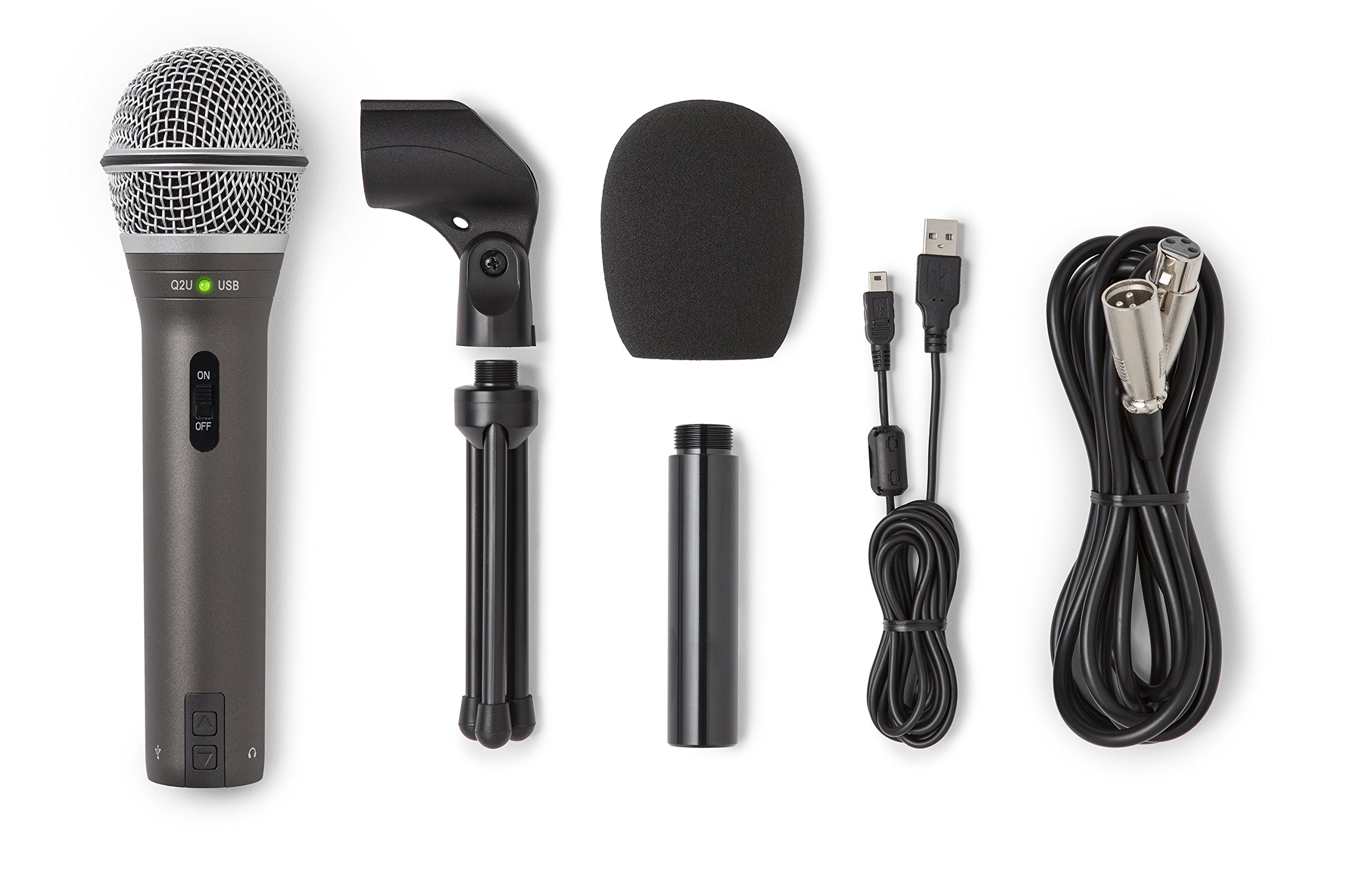
- Dynamic handheld microphone with USB-C and XLR connections.
- Includes USB-C and XLR cables, tripod stand, extension, mic clip, and windscreen.
- Connects directly to a computer with a USB-C interface.
Best For: Podcasters who want USB-C convenience now and an XLR connection option for a later setup.

MAONO PD400X
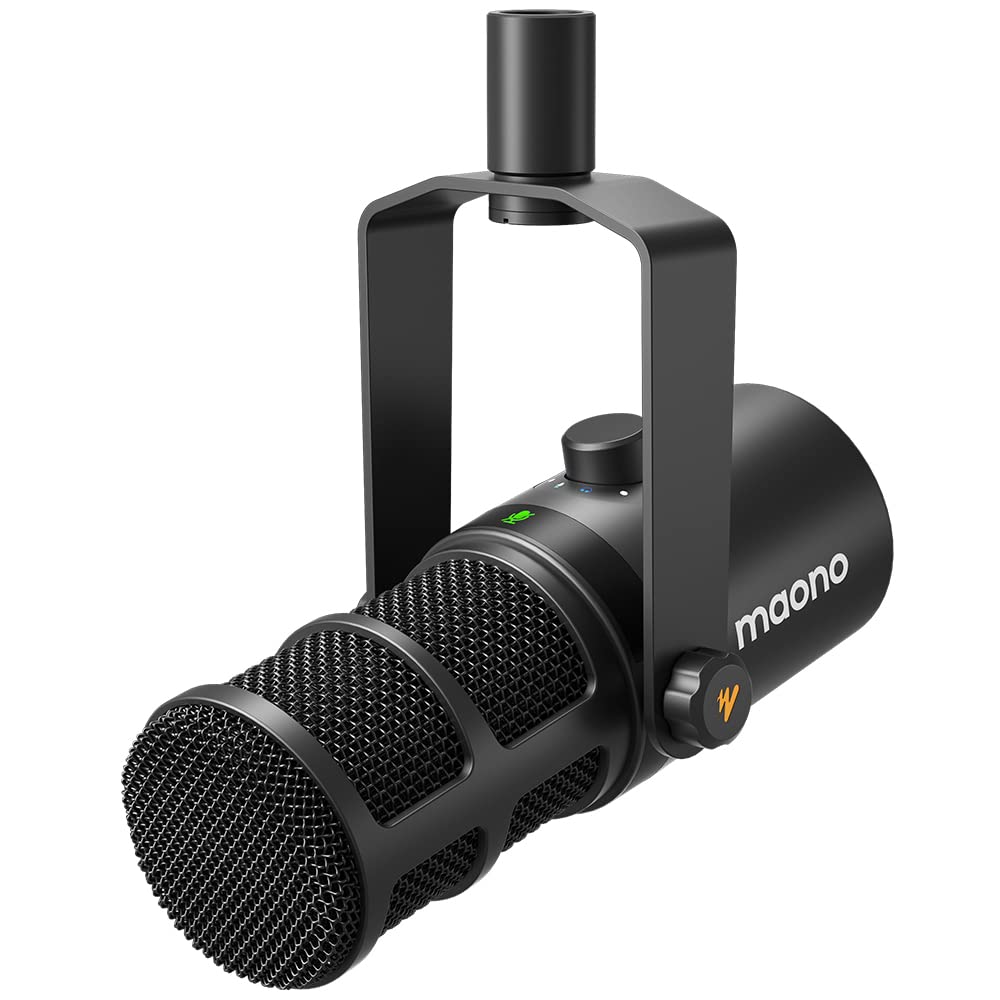
- Dynamic cardioid microphone with USB and XLR outputs.
- Three-in-one knob adjusts mic gain, headphone volume, and monitor mix.
- MAONO Link offers EQ, limiter, and compressor controls over USB.
Best For: Podcasters who want USB simplicity, XLR flexibility, and software controls for shaping their sound.
FIFINE AmpliGame AM8T
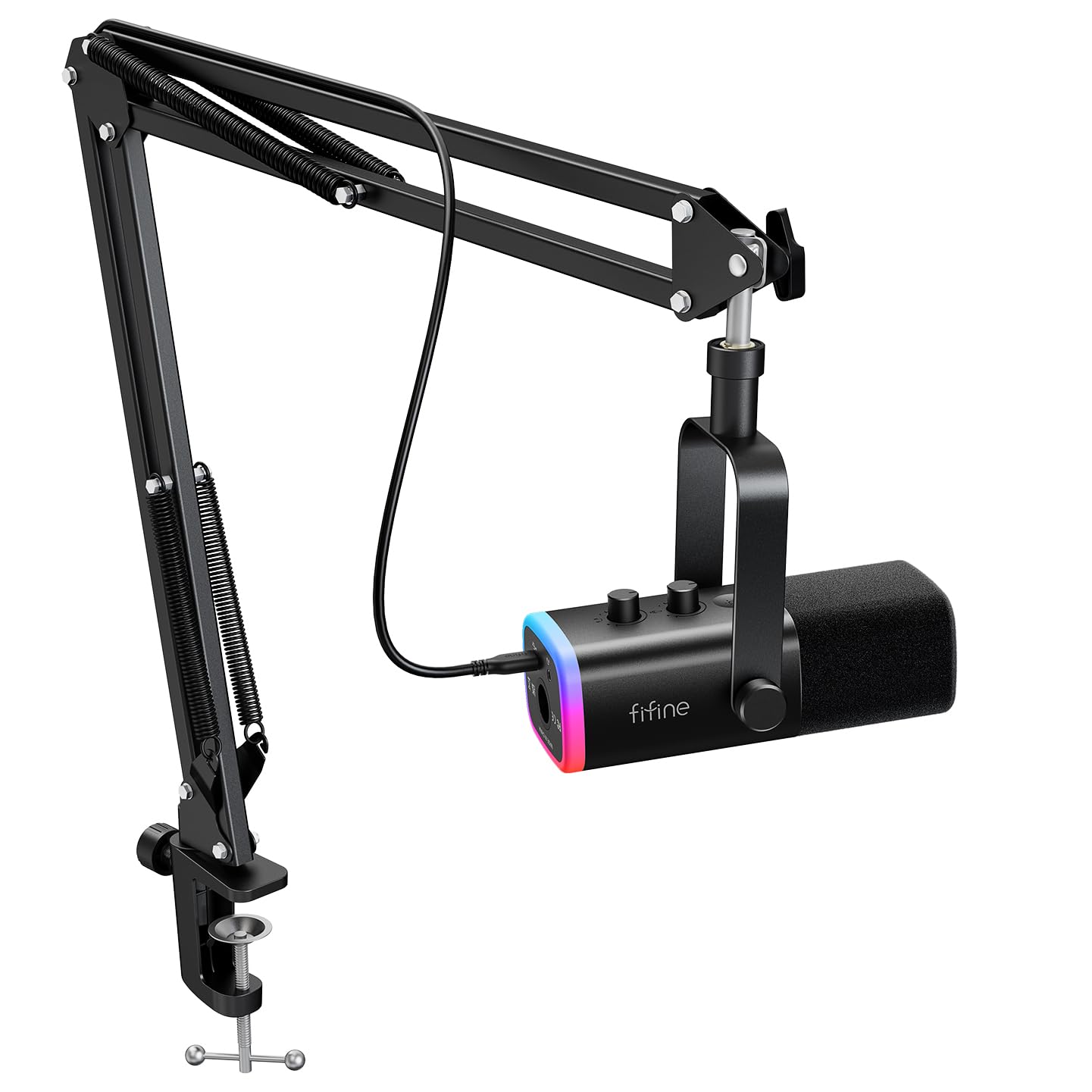
- Dynamic microphone with USB plug-and-play and XLR connections.
- Includes a boom arm, C-clamp, and 8.2-foot USB cable.
- Has mute, gain, headphone monitoring, and headphone volume controls.
Best For: Desk-based podcasters who want a dynamic USB/XLR microphone with an included boom arm.
MAONO PD300X
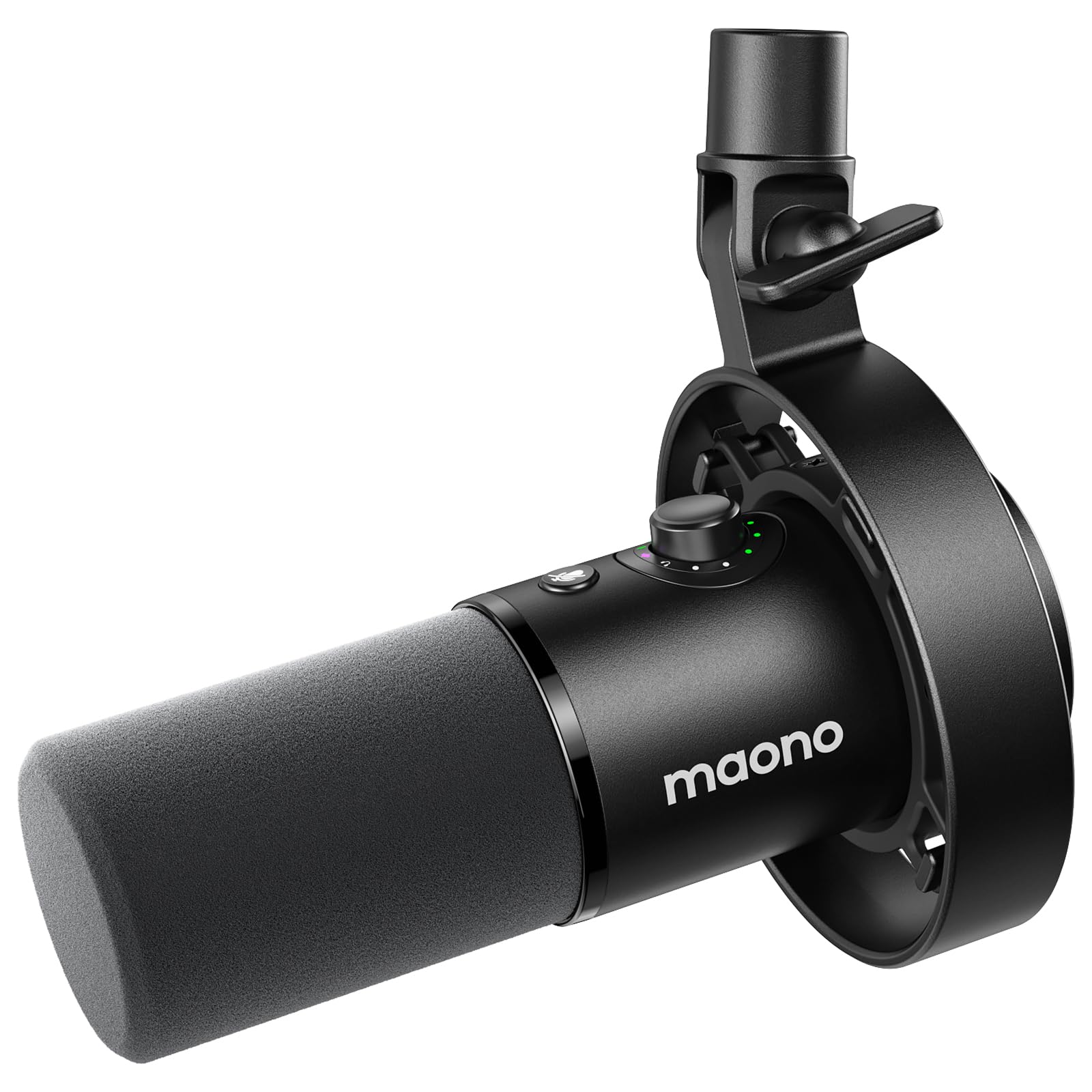
- Dynamic microphone with USB and XLR connections.
- MAONO Link includes visual EQ and audio processing controls.
- Four preset modes, noise reduction, mute, and monitoring controls.
Best For: Podcasters who want USB/XLR connections alongside software EQ, noise controls, and preset modes.
MAONO PD100
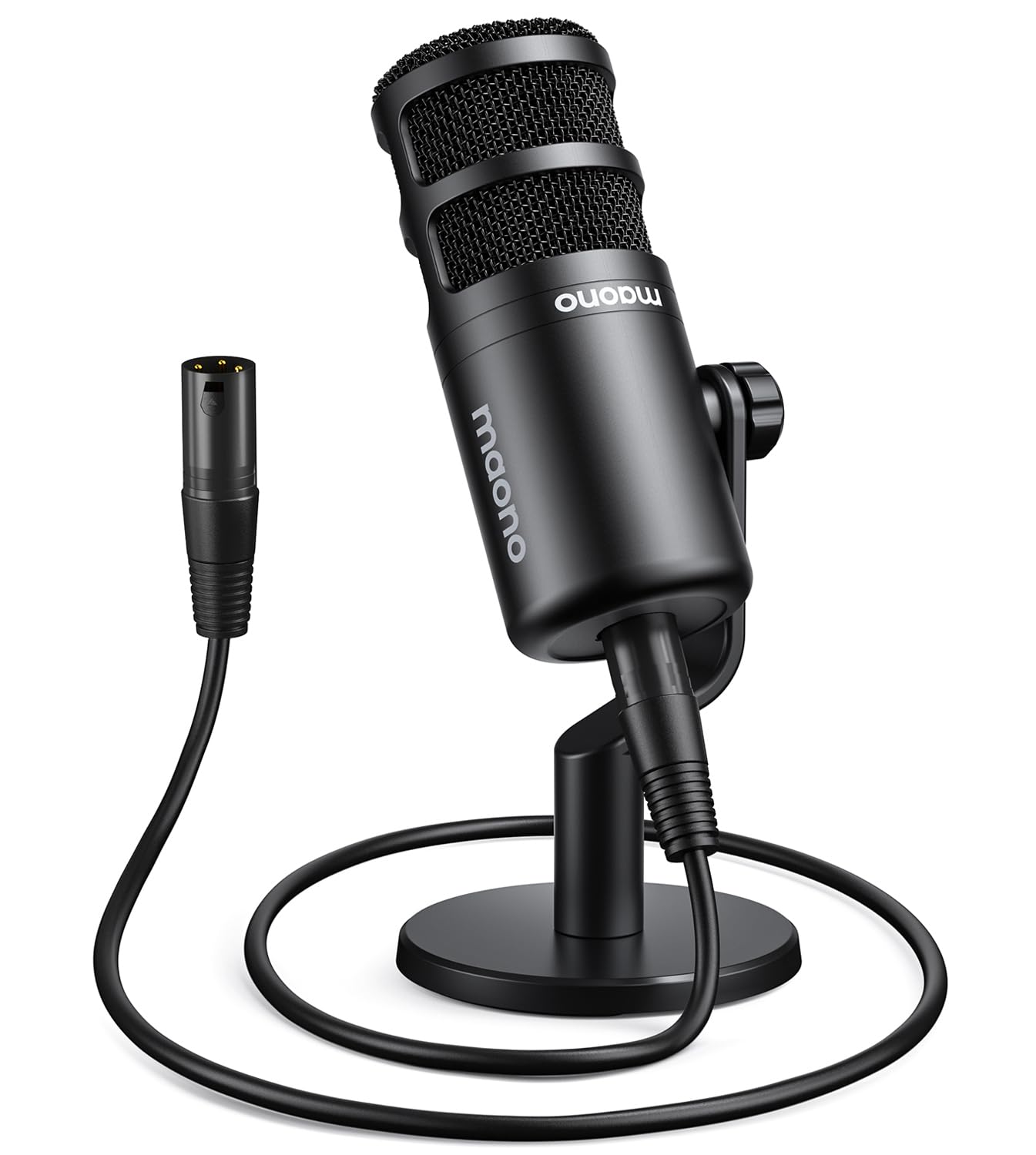
- Dynamic cardioid microphone with XLR connection.
- Includes desktop stand, rod extender, metal base, and 6.56-foot XLR cable.
- Built-in double-layer pop filter helps attenuate plosives.
Best For: Podcasters who already have or plan to use an XLR interface and want a desktop stand in the box.
Flexible USB-C and XLR Setup
Samson Q2U Dynamic USB-C/XLR Microphone
The Samson Q2U is a dynamic handheld microphone with both USB-C and XLR connections, giving a podcaster two ways to connect as a recording setup changes. It plugs directly into a computer with a USB-C interface, and the package includes both USB-C and XLR cables.
A desktop tripod stand, extension, mic clip, and windscreen are also included, so the basic recording position and connection accessories are covered. Its handheld format can suit a compact desk or a recording session where the mic is held.
Check that your computer has the needed USB-C interface, or plan to use the XLR cable with appropriate equipment.
Best For: Podcasters who want USB-C convenience now and an XLR connection option for a later setup.
| Pros | Cons |
|---|---|
|
|
Choose the Q2U if you want a dynamic mic with a simple USB-C route and the option to use XLR. The included cables and tripod make it a complete starting package.
Before buying, check the computer connection you plan to use and whether a handheld microphone suits your recording posture. Its listed controls are limited to the mic and included accessories, so consider another option if onboard gain or headphone monitoring is a priority.
App-Based Voice Controls
MAONO Dynamic Microphone, USB/XLR Podcast PC Microphone with Software, EQ,Tap-to-Mute, Headphone Jack, Gain Knob & Volume Control, Studio Mic for Broadcast, Recording, Streaming & Gaming (PD400X)
The MAONO PD400X combines a dynamic capsule and cardioid pickup pattern with USB and XLR outputs. USB offers plug-and-play connection, while XLR can connect to a professional interface, mixer, or portable PA system.
Its physical controls include a three-in-one knob for mic gain, headphone volume, and monitor mix, plus a tap-to-mute key with an LED indicator. When connected by USB, MAONO Link adds standard and advanced modes; advanced settings include EQ, limiter, and compressor controls.
This is a useful fit for a podcaster who wants hands-on controls and software options. Check whether your preferred settings require USB, since the software features are tied to that connection.
Best For: Podcasters who want USB simplicity, XLR flexibility, and software controls for shaping their sound.
| Pros | Cons |
|---|---|
|
|
The PD400X suits a podcaster who wants to start over USB and retain an XLR route for compatible audio equipment. Its integrated monitoring controls and MAONO Link options provide more adjustment than a basic plug-and-play mic.
Check which connection you will use most, because the software controls are USB-specific. Also confirm the stand and cable accessories you need before ordering, since they are not identified in the available package details.
Boom Arm Included
FIFINE XLR/USB Gaming Microphone Set, Dynamic PC Mic for Streaming Podcasting, Computer RGB Mic Kit with Boom Arm Stand, Mute Button, Headphones Jack, for Recording Vocal Voice-Over-AmpliGame AM8T
The FIFINE AmpliGame AM8T pairs a dynamic microphone with a boom arm, making it a practical choice for a podcast desk where the mic should move into position and clear away afterward. USB provides plug-and-play connection to a PC, while XLR supports use with a mixer or sound card.
The microphone has a mute button, gain knob, headphone jack, and headphone volume control for monitoring and quick adjustments. RGB lighting is customizable, and the included arm uses a desk clamp sized for desktops under two inches thick.
The package does not include an XLR cable, so add one if you plan to use that connection.
Best For: Desk-based podcasters who want a dynamic USB/XLR microphone with an included boom arm.
| Pros | Cons |
|---|---|
|
|
Pick the AM8T if an included boom arm is central to your podcast setup. It combines a dynamic mic, USB and XLR connections, and useful controls without requiring a separate arm purchase.
The tradeoff is that the XLR cable must be purchased separately, and the clamp has a stated desktop thickness limit. Check those desk dimensions and your intended connection before choosing it.
Software-Tuned Recording
MAONO Dynamic Microphone-XLR USB Podcast Recording Mic: for Vocal Recording, Content Creation, Home Studio, Voiceover, with 192kHz/24bit, Noise Reduction, Mic Gain, Monitoring, Mute (PD300X)
The MAONO PD300X is a dynamic USB/XLR microphone aimed at podcasters who want to adjust their recording workflow. Its USB connection supports MAONO Link, with a visual EQ panel and settings that include limiters, compressors, and high-pass filters.
The mic also has four preset modes, a custom mute button, and a smart knob for gain, headphone volume, and monitoring. A one-button noise-reduction mode and foam filter are included among its sound-management features.
XLR provides another connection path to compatible mixing equipment. The supplied package details do not identify a stand, so check your mounting needs before buying.
Best For: Podcasters who want USB/XLR connections alongside software EQ, noise controls, and preset modes.
| Pros | Cons |
|---|---|
|
|
Choose the PD300X if you want software-based sound shaping and convenient monitoring controls in a dynamic USB/XLR mic. The presets and MAONO Link options give it a more adjustable workflow than a basic USB microphone.
Consider whether you will use those software features over USB or connect through XLR instead. Check the mounting hardware you need, because a stand is not identified in the supplied package details.
Desktop XLR Starter Set
MAONO PD100 XLR Podcast Microphone, Cardioid Studio Dynamic Metal Desk Mic | Compatible with Audio Interface, Audio Mixer, Sound Card for Vocal Recording, Streaming, Voiceover, Music, Content Creation
The MAONO PD100 is a dynamic XLR microphone packaged with a desktop stand, rod extender, weighted metal base, and a 6.56-foot XLR cable. Its cardioid pattern and top-addressed pickup suit a close desk recording position, while a built-in double-layer pop filter helps attenuate plosive sounds.
The compact metal body and included base keep the setup centered on a desk without requiring a separately listed stand. This is an XLR-only choice, so a compatible audio interface, mixer, or sound card is needed for recording.
Check that your setup has that equipment and that a desktop stand suits your preferred mic position.
Best For: Podcasters who already have or plan to use an XLR interface and want a desktop stand in the box.
| Pros | Cons |
|---|---|
|
|
The PD100 is a sensible fit if your podcast setup already has an XLR input and you want a desktop stand and cable included. Its package covers key placement accessories, while its cardioid, top-addressed design is suited to a close desk position.
It does not offer USB connection, so compare it with dual-connection options if you want to plug directly into a computer without an audio interface.
How to Choose Microphones For Podcasting
How We Picked Microphones for Podcasting
These picks focus on products explicitly suited to podcasting and distinguish them by microphone type, connection, included setup gear, and onboard or software controls. The selection includes dynamic USB/XLR models for flexible workflows, an XLR desktop set, and a USB/XLR microphone bundled with a boom arm.
A condenser USB kit can also suit a home recording desk, but pickup type and accessories should match the space and way you plan to record.
Treat included equipment as part of the decision. A boom arm changes desk positioning; a desktop tripod or weighted base keeps the mic on the table.
Cables matter too: the Q2U and PD100 packages include both relevant cables, while the AM8T package omits its XLR cable. Verify the connector and mounting pieces that fit your actual setup.
Comparing Microphones for Podcasting
The biggest split is connection flexibility. The Samson Q2U, MAONO PD400X, FIFINE AM8T, and MAONO PD300X offer USB and XLR, while the PD100 is XLR-only.
USB can simplify a computer setup; XLR is useful when connecting to a compatible interface or mixer. Choose based on the equipment you own and whether you expect your recording setup to change.
Controls also separate these podcast microphones. The PD400X and PD300X combine gain, headphone volume, and monitoring controls, with software options over USB.
The AM8T adds a boom arm and onboard controls. The PD100 keeps the included setup focused on an XLR mic and desktop placement, while the Q2U supplies cables and a windscreen.
| Product | Standout features | Best for |
|---|---|---|
| Samson Q2UCheck Price |
| Podcasters who want USB-C convenience now and an XLR connection option for a later setup. |
| MAONO PD400XCheck Price |
| Podcasters who want USB simplicity, XLR flexibility, and software controls for shaping their sound. |
| FIFINE AmpliGame AM8TCheck Price |
| Desk-based podcasters who want a dynamic USB/XLR microphone with an included boom arm. |
| MAONO PD300XCheck Price |
| Podcasters who want USB/XLR connections alongside software EQ, noise controls, and preset modes. |
| MAONO PD100Check Price |
| Podcasters who already have or plan to use an XLR interface and want a desktop stand in the box. |
Choosing a Mic for Your Podcast Desk
Think about where the microphone will sit and how close you can speak to it. A boom arm such as the one bundled with the AM8T can move over the desk and fold away.
A desktop tripod or weighted base takes less setup but occupies table space. Check the clamp limit for the AM8T and make sure a desktop stand gives you the position you need.
Dynamic microphones make up most of this selection, with the Q2U, PD400X, AM8T, PD300X, and PD100 using dynamic designs. If considering a condenser USB model such as the FIFINE T669, note the supplied cardioid pickup and included arm, shock mount, and double pop filter.
Match the microphone format to your space, placement, and willingness to make adjustments; the listed features alone do not establish how it will sound in your room.
Which Podcast Microphone Fits Your Workflow?
For a flexible entry into USB and XLR, consider the Samson Q2U, which includes both cables and a desktop tripod. For a boom arm in the package, the FIFINE AM8T combines that mounting setup with USB/XLR connectivity and controls.
If USB software adjustments matter, compare the MAONO PD400X and PD300X, noting that their software options are associated with USB use.
Choose the MAONO PD100 when you have an XLR interface and want an included desktop stand, base, and cable. Before ordering any podcast mic, check connector compatibility, included accessories, mounting clearance, and whether you need headphone monitoring or software processing.
Those practical details determine how readily the microphone fits your recording workflow.