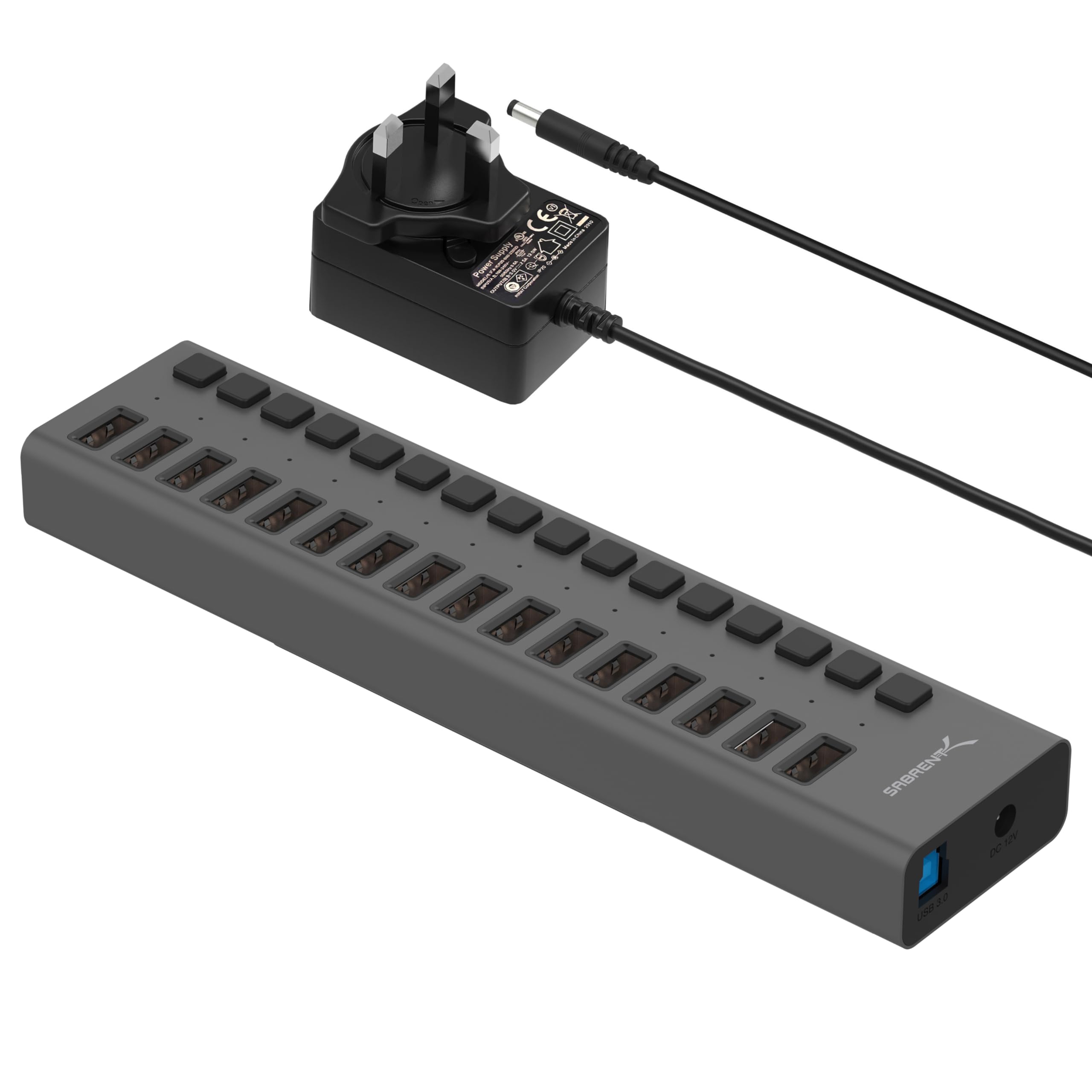
The SABRENT HB-PU16 review comes down to a specific desktop need: connecting a large group of USB-A devices while keeping each port’s power status visible.
Its 16 USB 3.0 ports and per-port switches make it worth considering for a busy recording or computer workstation, provided your setup can use a hub with this many connections.
SABRENT HB-PU16 Review Summary
The quick verdict
1,000+ ratings
Read Amazon ReviewsSABRENT HB-PU16
A fit for desktop users who need many USB-A connections for drives, card readers, and other peripherals in one hub.
- Sixteen downstream USB 3.0 Type-A ports.
- Supports USB 2.0 and USB 1.1 devices.
- Data transfer speeds of up to 5Gbps.
- Individual power switches for the ports.

Pros
- A high port count can reduce the need to unplug and reconnect devices as a workstation changes tasks.
- Individual switches make it possible to control ports separately.
Consider before buying
- Sixteen ports may be unnecessary if your setup only needs a few connections.
- The listed ports are USB Type-A, so check whether your computer and peripherals need adapters or a different connector.
Read the full review summary
The HB-PU16 provides 16 downstream USB 3.0 ports, supports USB 2.0 and USB 1.1 devices, and offers transfer speeds of up to 5Gbps.
Blue LEDs show power status port by port, and individual power switches provide a way to manage connected devices without reaching for each cable.
That combination may suit a fixed desktop setup with multiple drives, flash drives, card readers, or other USB peripherals.
It is a more specialized choice than a small travel hub: consider how many devices you actually connect, whether you need USB-A, and whether the hub’s power and cable arrangement fits your desk.
The buying factors
SABRENT HB-PU16 Scorecard
Editorial scores reflect listed features and buyer fit; they are not laboratory measurements or customer ratings.
Port capacity
Sixteen downstream ports provide substantial room for a collection of USB peripherals.
Device compatibility
It supports USB 3.0, USB 2.0, and USB 1.1 devices, covering several generations of USB-A equipment.
Transfer potential
USB 3.0 data rates reach up to 5Gbps, though actual transfers depend on the connected devices and setup.
Port control
Individual switches and blue power-status LEDs give each port a visible, direct control point.
Desktop workstation fit
Its high port count is useful when several peripherals need to remain connected in one place.
Portability
A 16-port design is better suited to a permanent workstation than a minimal travel kit.
Key Features and Specifications of SABRENT HB-PU16
- Sixteen downstream USB 3.0 Type-A ports.
- Supports USB 2.0 and USB 1.1 devices.
- Data transfer speeds of up to 5Gbps.
- Individual power switches for the ports.
- Blue LED indicators show power status for each port.
- Designed to connect or charge flash drives, card readers, external hard drives, and other USB peripherals.
- Plug and play, with hot-swapping support.
Pros and Cons of SABRENT HB-PU16
Pros
- A high port count can reduce the need to unplug and reconnect devices as a workstation changes tasks.
- Individual switches make it possible to control ports separately.
- Per-port blue LEDs make power status easier to see at a glance.
- USB 2.0 and USB 1.1 compatibility helps accommodate older peripherals alongside USB 3.0 devices.
Consider before buying
- Sixteen ports may be unnecessary if your setup only needs a few connections.
- The listed ports are USB Type-A, so check whether your computer and peripherals need adapters or a different connector.
- The maximum transfer rate is an interface ceiling; connected devices and other parts of the setup can affect actual transfer speeds.
Who Should Buy SABRENT HB-PU16?
Good fit
Consider the HB-PU16 if you regularly keep many USB-A devices connected to a desktop workstation.
For a home recording setup, that can be useful when drives, readers, and other peripherals share the same computer and you value having individual switches and visible power indicators.
Its broad USB-generation compatibility is another reason to consider it for a mixed collection of equipment.
Before choosing, count the devices you expect to leave connected and check their connector types, power needs, and placement against your desk arrangement.
Who should skip it
Skip this design if you only need one or two extra ports or want a small hub to carry in a laptop bag. Its 16-port layout is aimed at consolidating a larger desktop setup.
Look elsewhere if your devices rely on a different host or peripheral connector. Confirm that USB-A connections suit your computer and that the hub’s physical arrangement can sit comfortably where you plan to use it.
SABRENT HB-PU16 review: what 16 ports change at a workstation
A hub for a device-rich desk
Sixteen downstream ports make the HB-PU16 a consolidation option for a workstation with many USB peripherals.
That capacity can be helpful when drives, card readers, and other accessories stay connected between sessions; for a simpler setup, much of the available capacity may go unused.
USB 3.0 alongside older devices
The hub supports USB 3.0, USB 2.0, and USB 1.1, which may help a mixed-generation collection work from one connection point.
The stated rate of up to 5Gbps describes the USB 3.0 interface maximum, not a guaranteed transfer speed for every device or task.
Switches and status lights
Separate switches and blue status LEDs give each port a visible control point.
This can make it easier to see which connections are powered and to manage ports individually; check whether that level of control matches the way you organize devices at your desk.
Check the fit before buying
The 16-port count and USB Type-A connections define the practical fit. Count the devices you use at once, confirm their connector requirements, and consider where the hub will sit so the larger desktop-oriented design suits your workspace.
Alternatives to SABRENT HB-PU16
USB Hubs alternative
6,000+ ratings
Read Amazon ReviewsSABRENT HB-B7C3 10-Port USB 3.0 Hub
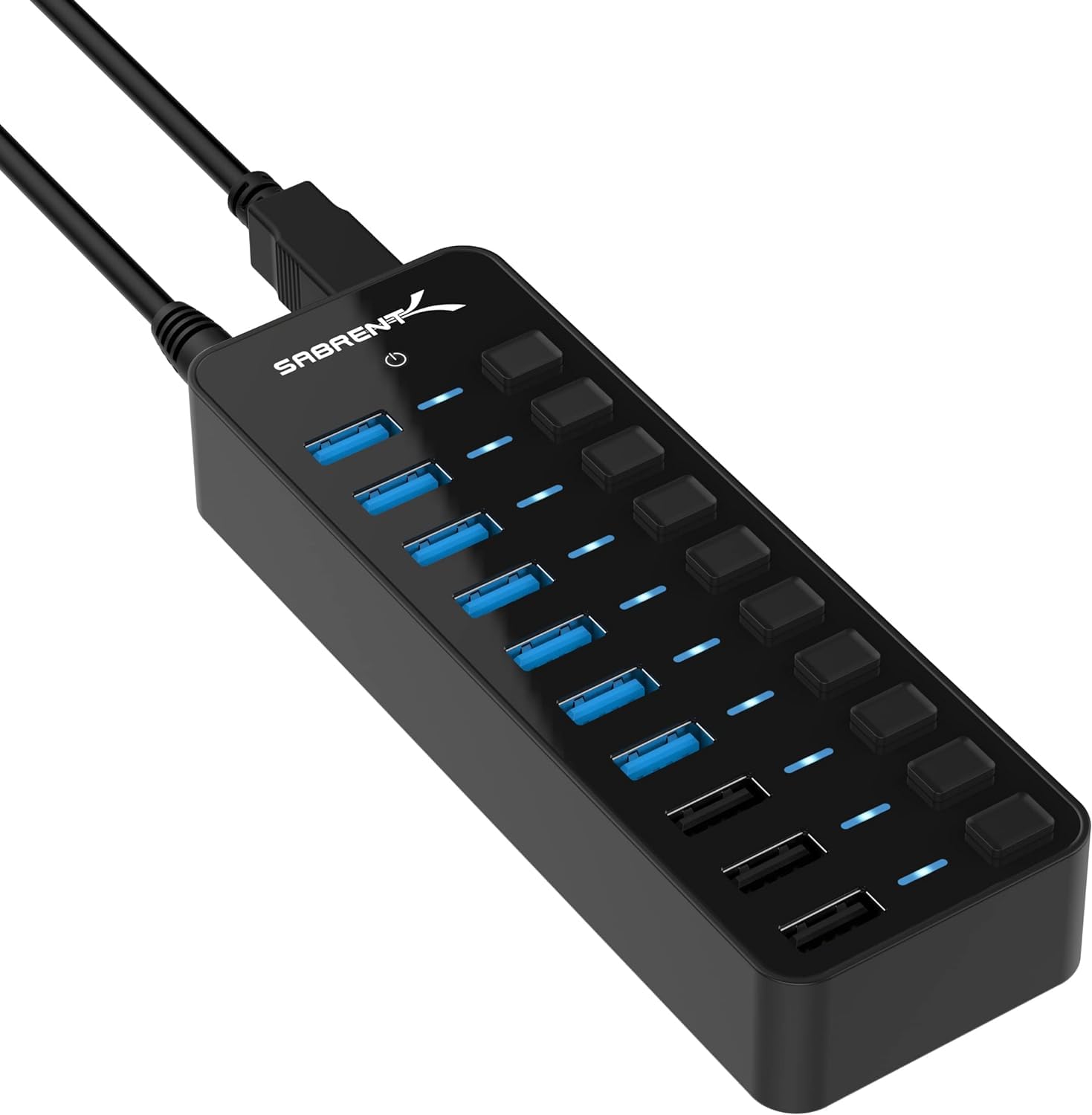
Choose the HB-PU16 when you need more USB 3.0 device connections; consider the HB-B7C3 if seven connections are enough and its three dedicated charging ports and included adapter better match your setup.
- The HB-B7C3 connects up to seven USB 3.0 devices at once, has individual switches and LEDs, and includes three dedicated charging ports and a 60W power adapter.
- The HB-PU16 provides 16 USB 3.0 ports, with an individual power switch and blue power-status indicator for each port.
USB Hubs alternative
2,000+ ratings
Read Amazon ReviewsSABRENT HB-MC3B 4-Port USB 3.0 Hub
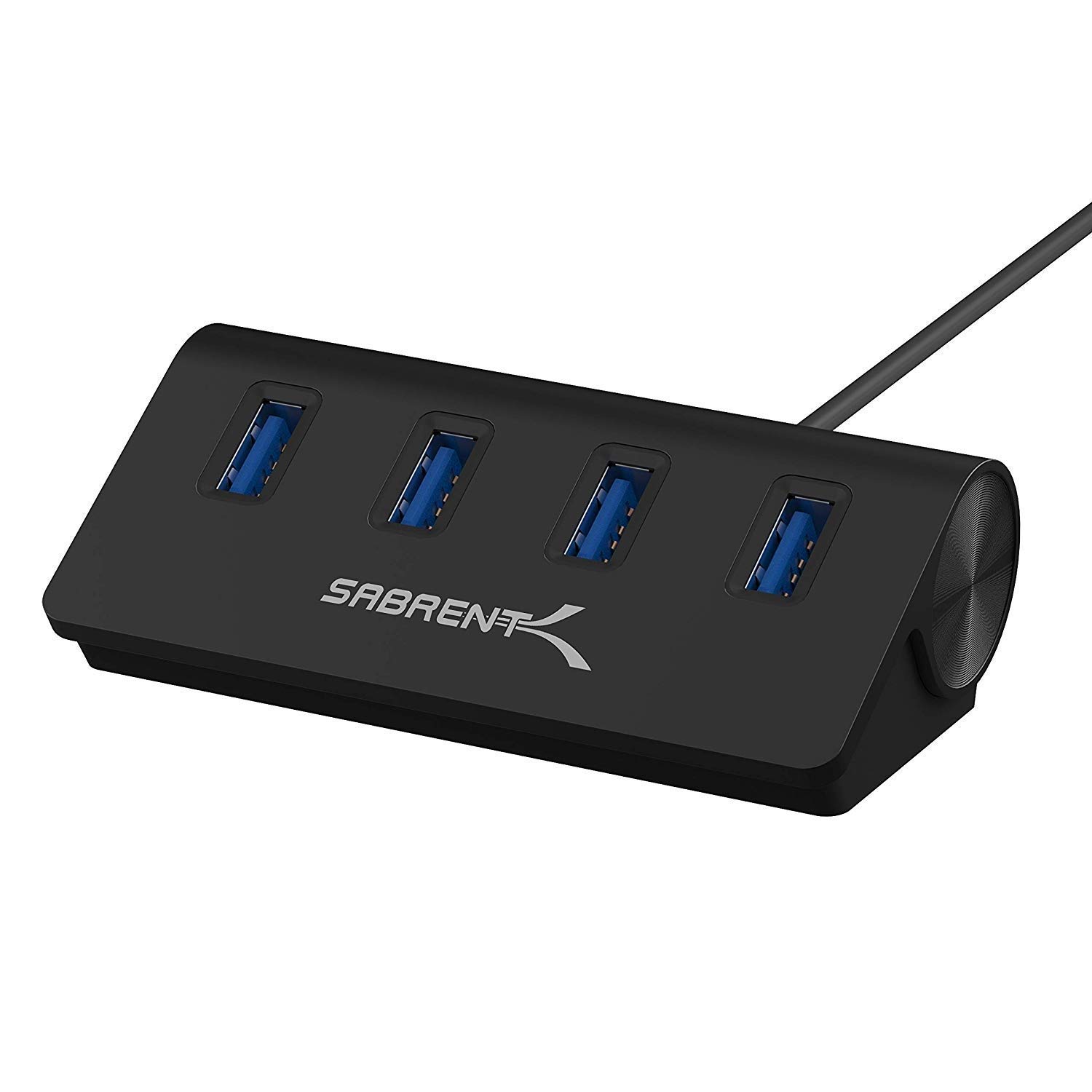
Choose the HB-PU16 for a workstation that needs many connected devices; consider the HB-MC3B if you only need four ports and its included cable better suits your placement.
- The HB-MC3B provides four USB 3.0 ports, supports speeds up to 5Gbps, and includes a 2.5-foot USB 3.0 cable.
- The HB-PU16 focuses on a large number of USB Type-A connections, with 16 ports and individual switches.
Is SABRENT HB-PU16 Worth It?
The SABRENT HB-PU16 is worth considering when a desktop setup needs many USB-A connections and per-port control.
Its 16 USB 3.0 ports, compatibility with USB 2.0 and USB 1.1 devices, switches, and status LEDs make a clear case for a device-heavy workstation.
Buy it if that capacity matches your regular setup and USB-A is the connector you need.
If you have only a few peripherals, compare smaller hubs instead; the extra ports are useful only when your workflow can put them to work.
Your review at a glance
1,000+ ratings
Read Amazon ReviewsSABRENT HB-PU16
A fit for desktop users who need many USB-A connections for drives, card readers, and other peripherals in one hub.
- Sixteen downstream USB 3.0 Type-A ports.
- Supports USB 2.0 and USB 1.1 devices.
- Data transfer speeds of up to 5Gbps.
- Individual power switches for the ports.