The MAONO PD400X Dynamic Microphone review is for creators choosing between a simple USB setup and a microphone that can also join a traditional audio chain.
Its dual outputs, headphone monitoring, and software controls make it adaptable for podcasting, streaming, and home recording.
MAONO PD400X Review Summary
The quick verdict
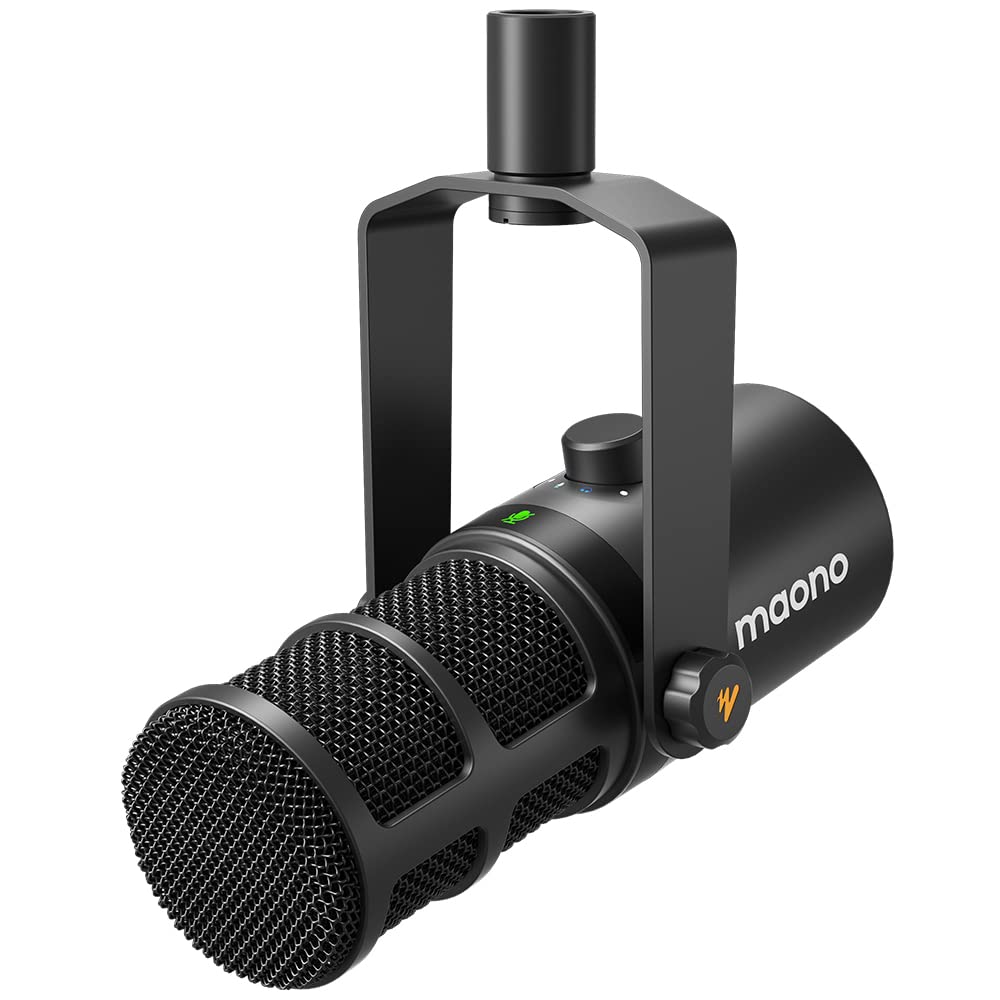
500+ ratings
Read Amazon ReviewsMAONO PD400X
A versatile choice for podcasters and streamers who want USB convenience, XLR connectivity, and on-mic controls for recording and monitoring.
- Dynamic microphone with a cardioid polar pattern, designed for vocals and applications such as podcasting, home recording, streaming, and broadcasting.
- Dual USB and XLR outputs: USB connects directly to a computer, while XLR connects to an audio interface, mixer, or portable PA system.
- Three-in-one digital knob for microphone gain, headphone volume, and monitor mix.
- Touch-to-mute control with an LED indicator.

Pros
- Offers both a direct USB connection and an XLR output for different recording setups.
- Combines several frequently used monitoring and level controls on the microphone.
Consider before buying
- Some software controls are tied to USB use, so buyers planning to record through XLR should check which adjustments their existing interface or mixer can provide.
- The three-in-one control serves several functions, so buyers who prefer separate physical controls may want to try the layout before settling on it.
Read the full review summary
The PD400X brings together a dynamic capsule, cardioid pickup pattern, USB and XLR outputs, and controls for gain, headphone volume, and monitor mix.
That combination gives a creator room to begin with a direct computer connection and later use an interface, mixer, or portable PA system.
It is best suited to someone who wants hands-on control and expects their recording setup to change over time.
USB users can access MAONO Link settings for tone selection and more detailed processing; buyers who plan to use XLR should consider whether their setup already has the additional processing and monitoring tools they need.
The buying factors
MAONO PD400X Scorecard
Editorial scores reflect listed features and buyer fit; they are not laboratory measurements or customer ratings.
Connection flexibility
USB and XLR outputs cover a direct computer workflow as well as connection to an interface, mixer, or portable PA system.
On-mic control
The digital knob handles gain, headphone volume, and monitor mix, while a touch control provides mute with an LED indicator.
USB software options
MAONO Link offers vocal tone and distance choices in Standard Mode and a wider set of audio adjustments in Advanced Mode.
Monitoring convenience
A headphone jack and monitor-mix control support listening while recording.
Room-friendly design
A dynamic capsule and cardioid pattern are a sensible design choice for vocal recording in a home room, though placement and room conditions still matter.
Setup simplicity
USB is described as plug-and-play, while XLR offers a more expandable route that depends on compatible audio equipment.
Key Features and Specifications of MAONO PD400X
- Dynamic microphone with a cardioid polar pattern, designed for vocals and applications such as podcasting, home recording, streaming, and broadcasting.
- Dual USB and XLR outputs: USB connects directly to a computer, while XLR connects to an audio interface, mixer, or portable PA system.
- Three-in-one digital knob for microphone gain, headphone volume, and monitor mix.
- Touch-to-mute control with an LED indicator.
- MAONO Link software includes Standard Mode vocal tone and distance choices, plus Advanced Mode settings such as EQ, limiter, and compressor.
- A 3.5 mm headphone jack supports monitoring through the microphone.
Pros and Cons of MAONO PD400X
Pros
- Offers both a direct USB connection and an XLR output for different recording setups.
- Combines several frequently used monitoring and level controls on the microphone.
- Includes software options for shaping the USB-connected signal.
- The cardioid dynamic design is appropriate for focused vocal recording.
Consider before buying
- Some software controls are tied to USB use, so buyers planning to record through XLR should check which adjustments their existing interface or mixer can provide.
- The three-in-one control serves several functions, so buyers who prefer separate physical controls may want to try the layout before settling on it.
- The microphone’s dual connectivity does not by itself supply an XLR interface or mixer; include compatible equipment in the setup plan.
Who Should Buy MAONO PD400X?
Good fit
Consider the PD400X if you record spoken vocals at a desk and want to start with a direct USB connection while keeping an XLR route available for a future studio setup.
The on-mic gain, headphone, and monitor-mix controls can make routine adjustments easier to reach during a session.
It also suits creators who want to make software adjustments while connected by USB. MAONO Link provides a simpler tone-and-distance selection as well as more detailed options, giving users different levels of control as their recording workflow develops.
Before buying, decide whether you expect to use the microphone mainly over USB or through XLR.
For XLR use, check that your interface or mixer supports the connection and offers any processing you want; for USB use, consider whether the available software controls match your preferred workflow.
Who should skip it
Look elsewhere if you need a microphone that includes a complete stand or boom-arm setup; the supplied description does not establish those accessories as part of this product.
It may be a poor fit if your only planned connection is XLR and you do not have compatible audio equipment. The microphone’s USB option is the more direct computer route.
How the MAONO PD400X Fits a Home Recording Setup
USB for a direct recording path
USB is the straightforward starting point for a computer-based podcast or stream.
The microphone’s plug-and-play connection and MAONO Link controls let users make adjustments in the software, with Standard Mode offering vocal tone and distance selections and Advanced Mode opening options such as EQ, limiting, and compression.
XLR leaves room to expand
The XLR output is useful when a creator wants to connect to an interface, mixer, or portable PA system.
That flexibility can help the microphone remain part of a changing setup, but the rest of the audio chain still matters: confirm that the connected equipment provides the inputs and processing you intend to use.
Controls and monitoring at the mic
The digital knob brings gain, headphone volume, and monitor mix together, while the mute touch control has an LED indicator.
A headphone jack allows monitoring through the microphone, making these controls relevant for recording sessions where adjustments need to be made without reaching for software.
A directional dynamic approach
A dynamic capsule and cardioid pattern are a plausible match for close vocal work in a home recording space.
The pattern describes a focused pickup design, but it does not guarantee that a room will sound quiet; microphone position and the recording environment still influence what reaches the recording.
Alternatives to MAONO PD400X
Vocal Dynamic Microphones alternative
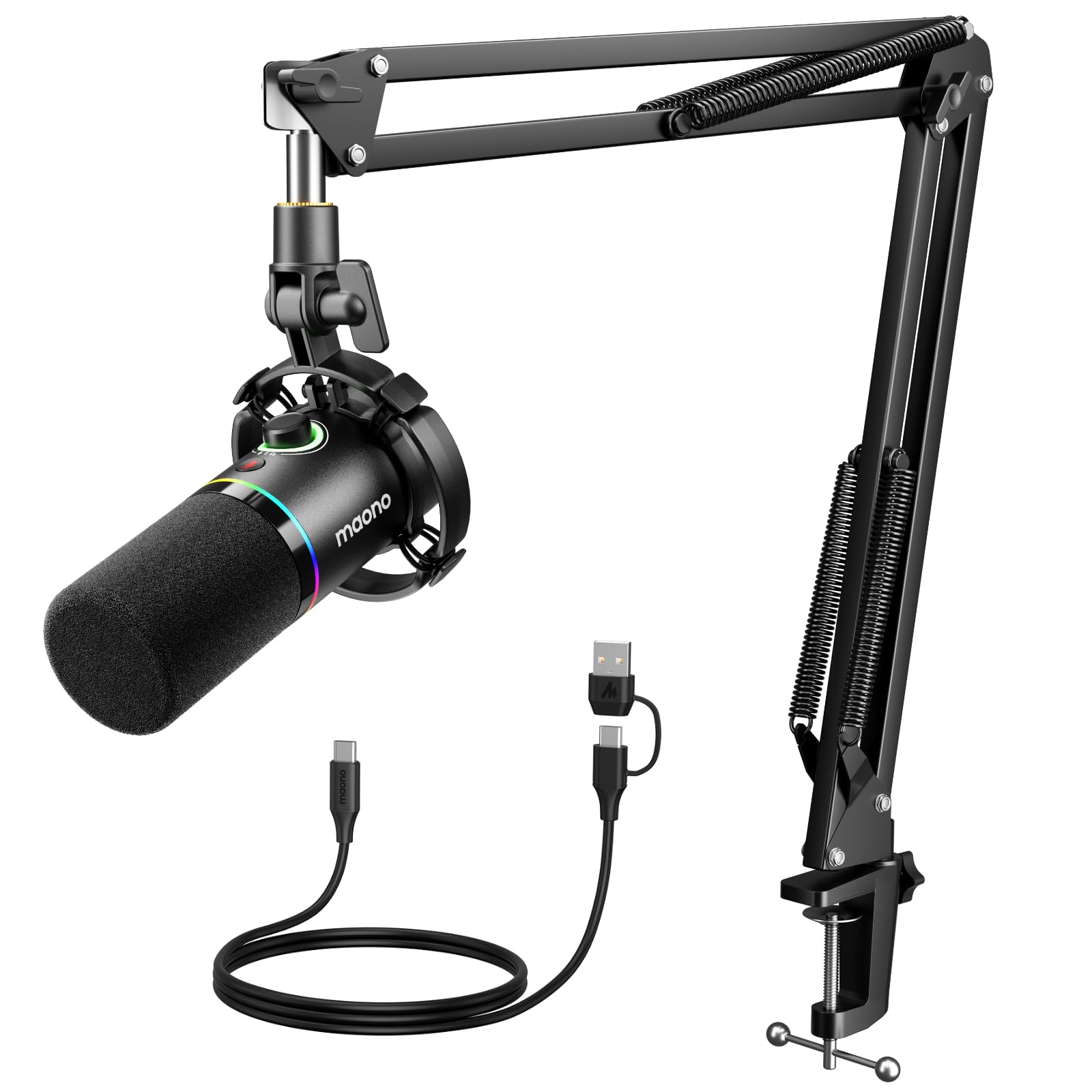
2,000+ ratings
Read Amazon ReviewsMAONO PD200XS
Choose the PD200XS if an included boom arm and shock mount are useful parts of your setup. The PD400X may suit you better if its monitor-mix control and three-in-one knob are the more relevant features.
- The PD200XS is also a USB/XLR dynamic microphone with MAONO Link, but its kit includes an adjustable boom arm, shock mount, and USB cable.
- Its software supports EQ, limiter, and compressor adjustment in USB mode, and it has a two-in-one gain and headphone-volume knob.
- The PD400X pairs USB and XLR outputs with a three-function digital knob and MAONO Link controls, including tone and distance choices over USB.
Vocal Dynamic Microphones alternative
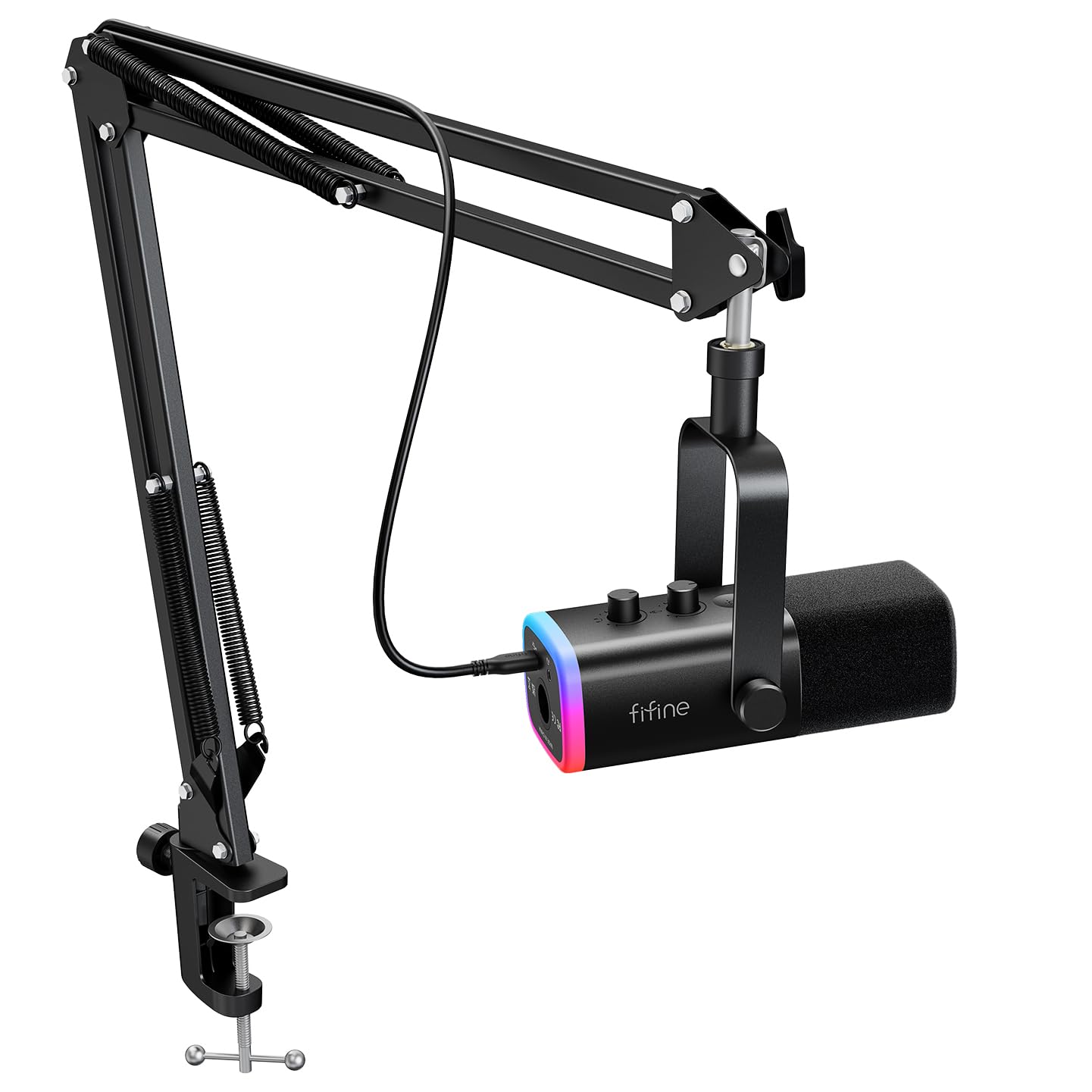
6,000+ ratings
Read Amazon ReviewsFIFINE AmpliGame AM8T
The AM8T is a practical fit if you want a boom arm included and value RGB lighting for a gaming setup. Consider the PD400X if its MAONO Link options and monitor-mix control better match your recording workflow.
- The AM8T is a USB/XLR dynamic microphone kit that includes a boom arm and offers customizable RGB lighting.
- Its on-mic features include a mute button, gain knob, headphone jack, and headphone-volume control; its package description says an XLR cable is not included.
- The PD400X offers USB and XLR connections, MAONO Link software controls, and a digital knob for gain, headphone volume, and monitor mix.
Is MAONO PD400X Worth It?
The MAONO PD400X is worth considering for podcasting, streaming, and home vocal recording if you value USB convenience, XLR expandability, and accessible monitoring controls.
Its strongest case is flexibility: it can connect directly to a computer and offers a route into an interface or mixer-based setup.
Choose it with your connection plan in mind. USB makes the most of its software controls, while XLR depends on compatible external gear; buyers who need a supplied boom arm should compare complete kits before deciding.
Your review at a glance
500+ ratings
Read Amazon ReviewsMAONO PD400X
A versatile choice for podcasters and streamers who want USB convenience, XLR connectivity, and on-mic controls for recording and monitoring.
- Dynamic microphone with a cardioid polar pattern, designed for vocals and applications such as podcasting, home recording, streaming, and broadcasting.
- Dual USB and XLR outputs: USB connects directly to a computer, while XLR connects to an audio interface, mixer, or portable PA system.
- Three-in-one digital knob for microphone gain, headphone volume, and monitor mix.
- Touch-to-mute control with an LED indicator.