The KODAK Slide N Scan Max is designed to make home film archiving more straightforward, with a feed-through tray, one-touch image adjustments, and direct SD card saving.
This kodak slide n scan max review looks at how its format support and compact workflow fit buyers converting older slides and negatives.
Slide N Scan Max Review Summary
The quick verdict
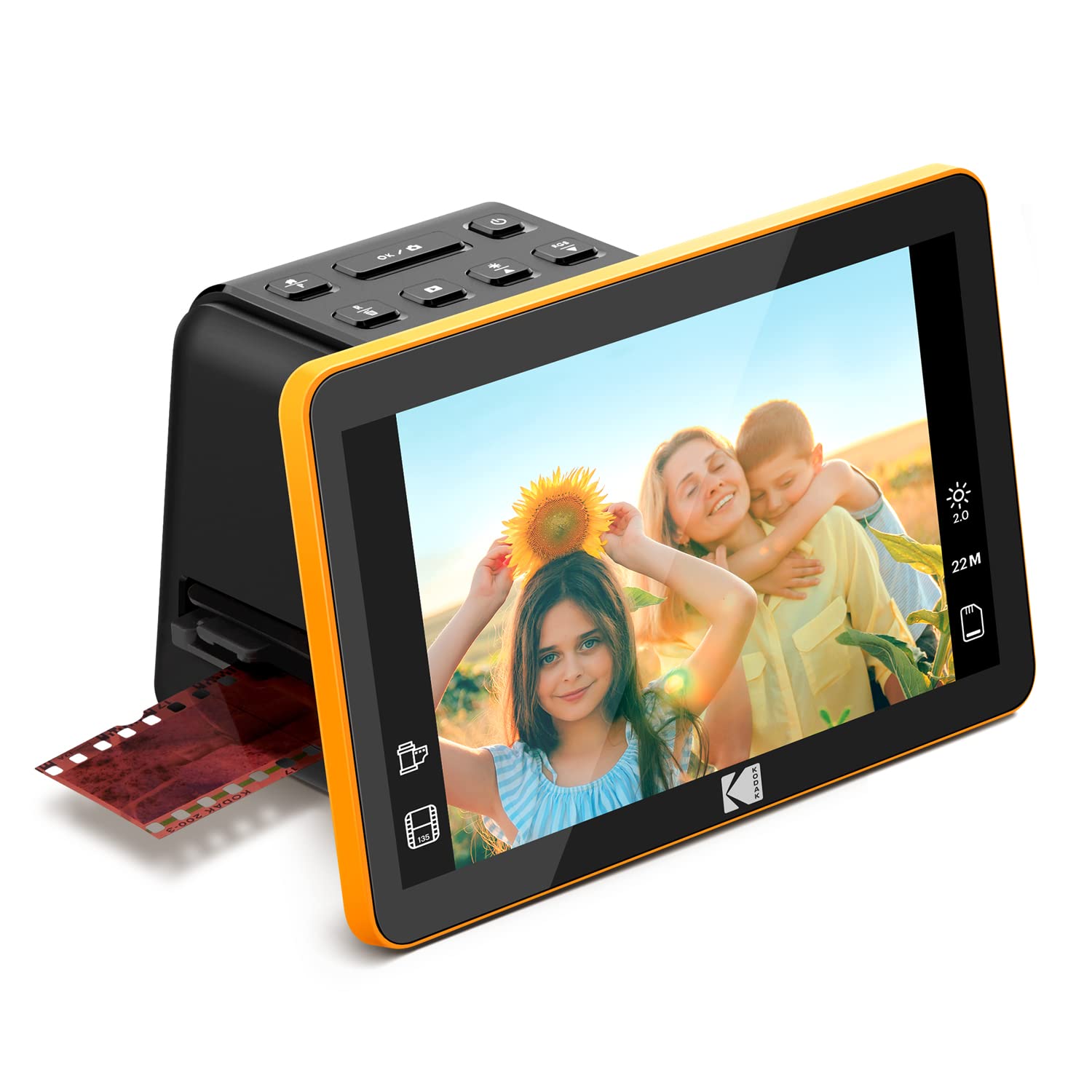
1,000+ ratings
Read Amazon ReviewsKODAK Slide N Scan Max
A practical choice for families and hobbyists who want to digitize common slide and negative formats with on-device editing and SD card storage.
- Handles 135, 110, and 126 film formats, including slides and color or black-and-white negatives.
- A moving tray feeds film through the scanner to reduce the need for constant repositioning.
- Saves directly to SD or SDHC cards up to 32GB, so scanning can be done without a computer in the workflow.
- One-touch capture software provides image resizing, conversion, and adjustment options.

Pros
- Direct card saving supports a simple, computer-free scanning routine.
- Covers three commonly encountered film formats and both slides and negatives.
Consider before buying
- SD and SDHC storage is limited to cards up to 32GB, so large archives may need to be transferred or split across cards.
- The listed system requirement is Windows 7; check whether the connection and software suit your computer if you plan to use one.
Read the full review summary
The Slide N Scan Max combines support for 135, 110, and 126 film with the ability to handle slides and color or black-and-white negatives.
Its tray is intended to keep film moving through the scanner without constant repositioning, which may make a batch of family archives easier to work through than a setup that requires handling each frame individually.
Direct saving to an SD or SDHC card up to 32GB means a computer does not need to be part of the scanning workflow.
The scanner also offers one-touch resizing, conversion, and image adjustments, plus output up to 4208 × 3120 from a 13MP CMOS sensor with 22MP interpolation.
It is best suited to convenient personal archiving; buyers with a particular computer or file-management setup should check compatibility and workflow details before choosing.
The buying factors
Slide N Scan Max Scorecard
Editorial scores reflect listed features and buyer fit; they are not laboratory measurements or customer ratings.
Film format coverage
Supports 135, 110, and 126 film, including slides and color or black-and-white negatives.
Batch handling
The smooth-moving tray is designed to feed film without constant repositioning.
Standalone workflow
Direct SD or SDHC saving up to 32GB avoids the need for a computer during scanning.
Editing simplicity
One-touch controls cover resizing, conversion, and image adjustments without complex menus.
Output detail
The 13MP CMOS sensor and 22MP interpolation support output up to 4208 × 3120.
Computer flexibility
USB is listed as the connection, while the listed minimum system requirement is Windows 7; confirm it suits your intended setup.
Key Features and Specifications of Slide N Scan Max
- Handles 135, 110, and 126 film formats, including slides and color or black-and-white negatives.
- A moving tray feeds film through the scanner to reduce the need for constant repositioning.
- Saves directly to SD or SDHC cards up to 32GB, so scanning can be done without a computer in the workflow.
- One-touch capture software provides image resizing, conversion, and adjustment options.
- Uses a 13MP CMOS sensor with 22MP interpolation and captures images up to 4208 × 3120.
- Compact desktop design measures 6.69 × 5.35 × 4.45 inches and weighs 16 ounces.
Pros and Cons of Slide N Scan Max
Pros
- Direct card saving supports a simple, computer-free scanning routine.
- Covers three commonly encountered film formats and both slides and negatives.
- Feed-through tray design can help keep a scanning session moving.
- One-touch editing options reduce the need to navigate complex controls.
Consider before buying
- SD and SDHC storage is limited to cards up to 32GB, so large archives may need to be transferred or split across cards.
- The listed system requirement is Windows 7; check whether the connection and software suit your computer if you plan to use one.
- The 22MP figure uses interpolation, so buyers prioritizing native capture detail should compare output expectations carefully.
Who Should Buy Slide N Scan Max?
Good fit
Consider the Slide N Scan Max if you have boxes of 135, 110, or 126 slides and negatives and want a compact device focused on getting them into digital form.
Its tray-feed approach and on-device editing are aimed at a less fiddly home archiving process, while direct SD saving lets you work without keeping a computer beside the scanner.
It also fits buyers who value format flexibility over a highly specialized workflow.
Before purchasing, check that your film is one of the supported formats, that a 32GB maximum card capacity works for your project, and that the listed Windows 7 minimum system requirement matches any computer-based use you expect.
Who should skip it
Look elsewhere if you need to scan film formats beyond 135, 110, and 126, or if your archive requires card capacity above 32GB without frequent transfers.
If your priority is a computer-centered setup, verify software and operating-system compatibility for your specific machine before deciding; the listed minimum requirement alone may not answer every compatibility question.
What the Slide N Scan Max Means for Home Film Archiving
A tray designed for longer sessions
The moving tray is meant to feed film without repeated repositioning, a useful design choice when digitizing multiple frames in one sitting.
It can make the physical handling feel more continuous, although care in preparing and organizing the originals still matters for an orderly archive.
Three formats cover varied family collections
Support for 135, 110, and 126 film broadens the scanner’s usefulness for collections assembled across different cameras and eras.
Since it handles slides and both color and black-and-white negatives, one device can serve several kinds of common home archive material; buyers should still identify their film format before starting.
Card-first storage changes the workflow
Saving directly to an SD or SDHC card up to 32GB lets scanning happen independently of a computer.
That is convenient for a standalone session, but the card limit makes planning worthwhile: a large project may call for periodic transfers or more than one card.
Resolution figures need context
The scanner pairs a 13MP CMOS sensor with 22MP interpolation and lists output up to 4208 × 3120.
Interpolation can produce a larger file, but buyers should distinguish that maximum output from native sensor capture when deciding whether the scanner’s intended level of detail suits their prints, sharing, or preservation plans.
Alternatives to Slide N Scan Max
Slide & Negative Scanners alternative
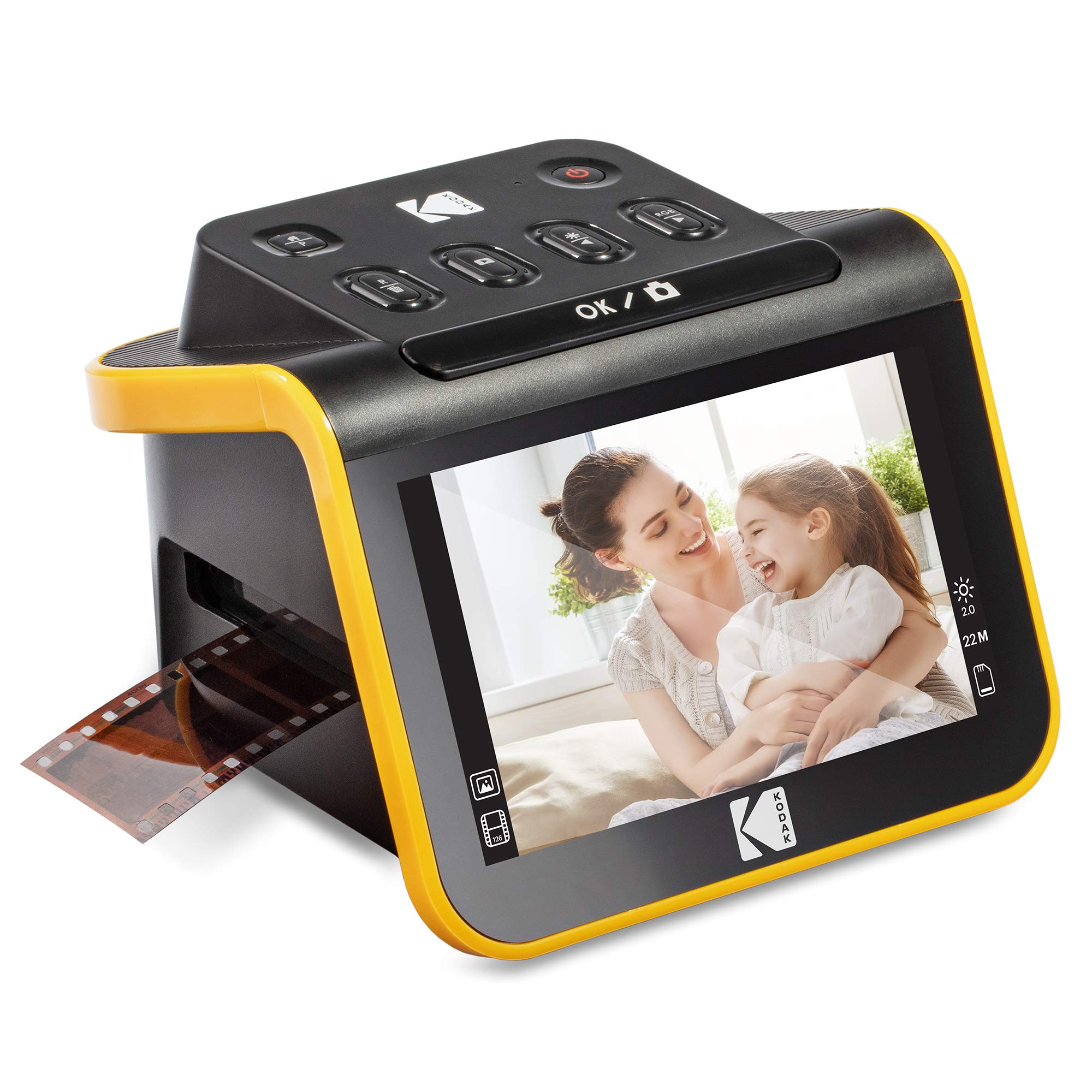
12,000+ ratings
Read Amazon ReviewsKODAK Slide N Scan Film & Slide Scanner
Choose the Slide N Scan Max if its direct, compact scanning workflow and moving tray suit your priorities.
Consider this alternative if a built-in 5-inch viewing screen and the included HDMI cable, adapters, and cleaning brush are more useful for your setup.
- This KODAK scanner covers 135, 110, and 126 film and adds a 5-inch LCD with gallery mode for previewing and viewing images.
- It saves to SD or SDHC cards up to 32GB and includes a 50mm slide holder, film adapters, USB and HDMI cables, and a cleaning brush.
- The Slide N Scan Max supports 135, 110, and 126 film, saves directly to SD or SDHC cards up to 32GB, and emphasizes a tray-feed process with one-touch editing.
Slide & Negative Scanners alternative
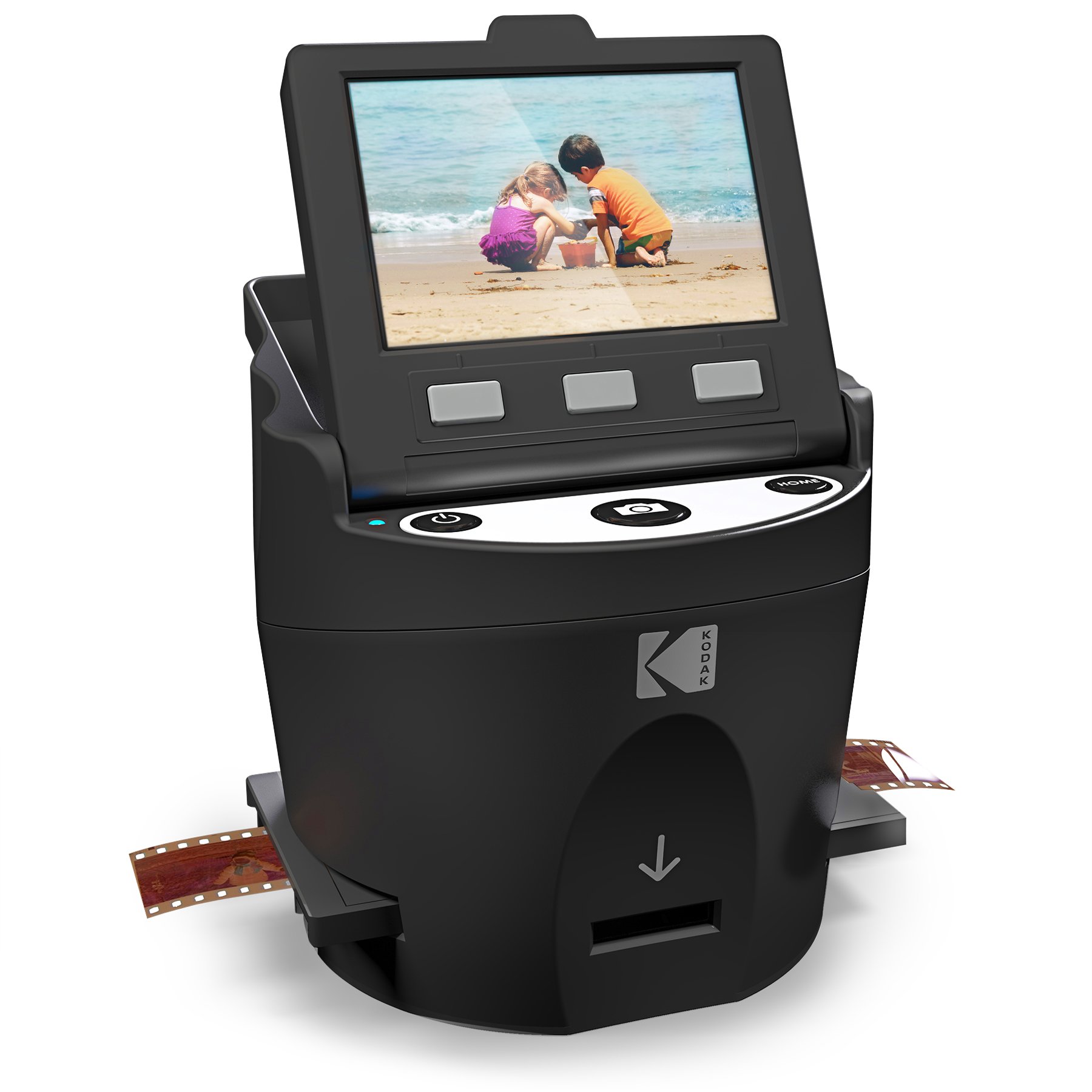
11,000+ ratings
Read Amazon ReviewsKODAK SCANZA Digital Film & Slide Scanner
The Slide N Scan Max is a closer fit if you only need its listed 135, 110, and 126 formats and value its straightforward card-first approach.
The SCANZA is worth comparing if your collection includes Super 8 or 8mm, or if its larger supported card capacity and adjustable display better match your project.
- The SCANZA supports 35mm, 126, and 110 film as well as Super 8 and 8mm, with a 3.5-inch adjustable, tilting LCD.
- It includes multiple film inserts and adapters, one-touch controls, and SD card support up to 128GB.
- The Slide N Scan Max supports 135, 110, and 126 film, with direct SD or SDHC saving up to 32GB and one-touch resizing, conversion, and adjustment.
Is Slide N Scan Max Worth It?
The KODAK Slide N Scan Max is worth considering for home users who want a compact way to digitize 135, 110, and 126 slides or negatives.
Its feed-through tray, one-touch adjustments, and direct card saving make the workflow approachable for personal archives.
Before buying, confirm that your film formats, 32GB card limit, and computer needs fit the project.
The 22MP interpolated output is a useful maximum, but buyers seeking a specific level of native detail should weigh that distinction against their intended use.
Your review at a glance
1,000+ ratings
Read Amazon ReviewsKODAK Slide N Scan Max
A practical choice for families and hobbyists who want to digitize common slide and negative formats with on-device editing and SD card storage.
- Handles 135, 110, and 126 film formats, including slides and color or black-and-white negatives.
- A moving tray feeds film through the scanner to reduce the need for constant repositioning.
- Saves directly to SD or SDHC cards up to 32GB, so scanning can be done without a computer in the workflow.
- One-touch capture software provides image resizing, conversion, and adjustment options.